What to practice
- Explain current exam parts, study cycles, prerequisite repair and a record of errors and confidence.
Chapter 2 is a short diagnostic. Chapters 3–6 teach Unit 1, polynomial and rational functions; 7–12, Unit 2, exponential and logarithmic functions; 13–17, Unit 3, trigonometric and polar functions. Chapters 18–20 build calculator, written-response and mixed-problem skills, Chapter 22 prepares a complete attempt, and Chapters 23–24 are practice exams. Optional Chapter 21 previews Unit 4, which the exam does not test.
Know the May 2027 exam
College Board lists the exam for Tuesday, May 11, 2027, Session 1; confirm the time with your school. It is hybrid digital: you answer multiple-choice questions and read free-response prompts in the Bluebook app, then handwrite free-response answers in a paper booklet (exam format).
| Part | Questions | Time | Share of score | Calculator |
|---|---|---|---|---|
| I-A | 29 multiple choice | 65 min | 43.75% | Not permitted |
| I-B | 13 multiple choice | 40 min | 18.75% | Graphing, required |
| II-A | FRQ 1, function concepts; FRQ 2, non-periodic model | 35 min | 18.75% | Graphing, required |
| II-B | FRQ 3, periodic model; FRQ 4, symbolic manipulation | 35 min | 18.75% | Not permitted |
Each free-response question is worth six points. Materials showing 40 multiple-choice questions describe the format used before the May 2027 exam.
Respect the calculator boundaries
Bluebook's built-in Desmos calculator appears only in Parts I-B and II-A, and you may also bring up to two approved handheld graphing calculators. The public Desmos website and app are not allowed during the exam (calculator policy). Use radian mode, and practice no-calculator parts with no device nearby; Chapter 18 covers calculator technique.
Choose a 12-, 6- or 2-week cycle
A study block is 45–60 focused minutes. A content chapter usually takes three blocks: learn the lesson, attempt the printed practice, then score and repair.
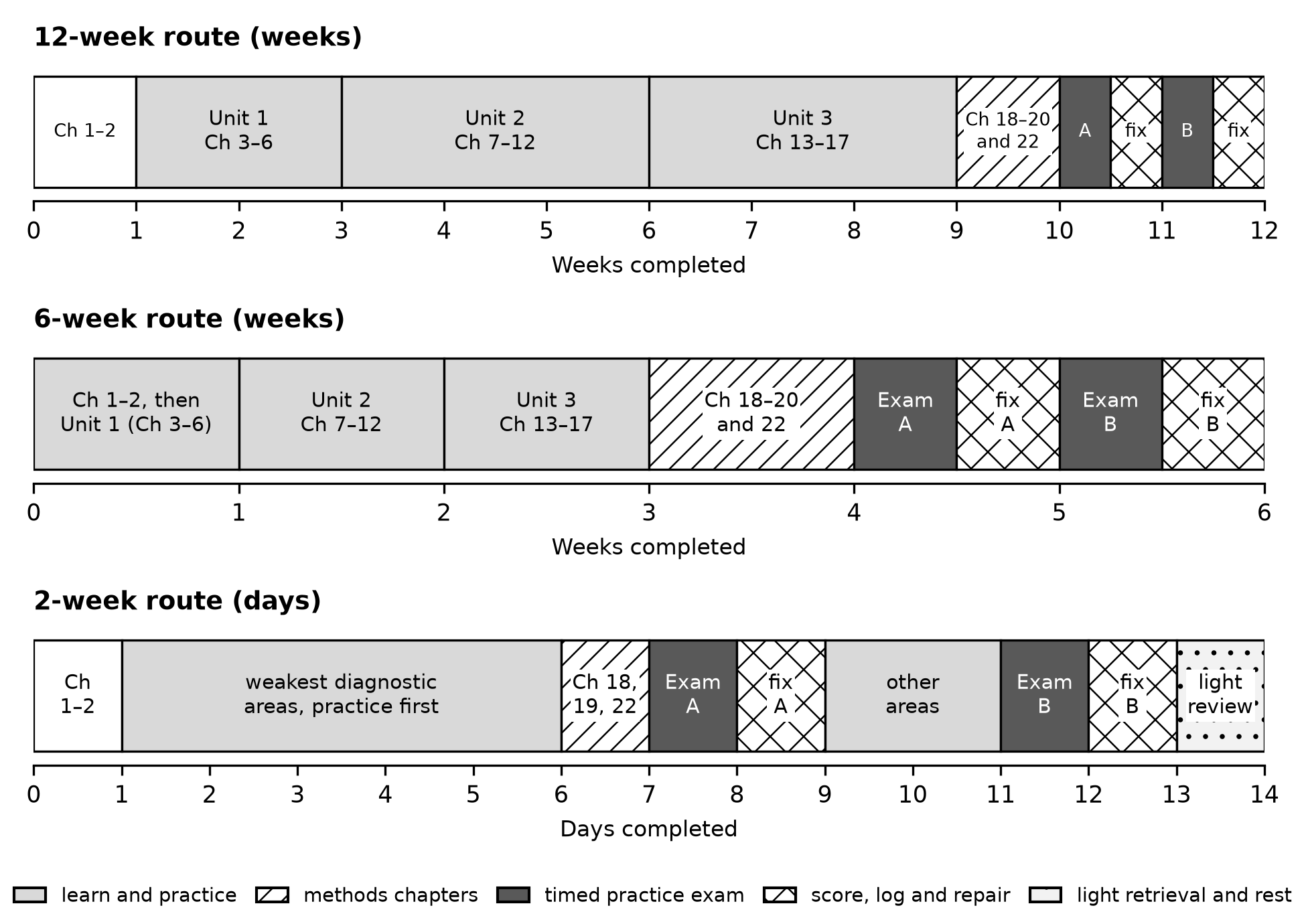
Figure 1.1. Three study routes. Each practice exam has its own repair time.
- 12 weeks, six to eight blocks a week, teaches every unit first.
- 6 weeks, eight to ten blocks a week, keeps every unit; where diagnostic answers were correct and sure, try the chapter practice first and reread only what its explanations name.
- 2 weeks assumes you have finished the course; it cannot provide first-time learning.
In every route, repair Practice Exam A before taking Exam B, and keep one catch-up block each week. If week 1 took more than 1.25 times the planned blocks, lengthen the calendar rather than skipping repair. Spacing and self-testing follow an IES practice guide; the routes themselves are untested.
Repair prerequisites when they appear
The course description assumes earlier algebra: linear and quadratic functions, factoring, right-triangle trigonometry, systems of equations, piecewise functions, exponents, radicals and complex numbers. When an error traces to one, write the rule with an example, do two different short checks, and return to the lesson.
For example, for because is a factor of the numerator, but is not : there is a term, not a factor. Checks: simplify and . (Answers: ; for .)
Keep an error-and-confidence log
Before checking an answer, write your confidence: sure, unsure or guessed. Log every miss and every unsure correct answer in seven columns: question number, your answer and confidence, the key, error type, first incorrect step, repair location and retry date.
Name the earliest error with one of six types. Meaning: misreading what a quantity represents. Representation: misreading a graph, table or notation. Method choice: an unsuitable approach. Execution: an algebra or arithmetic slip. Validity: a missed domain restriction or extraneous solution. Communication: missing required reasoning or units.
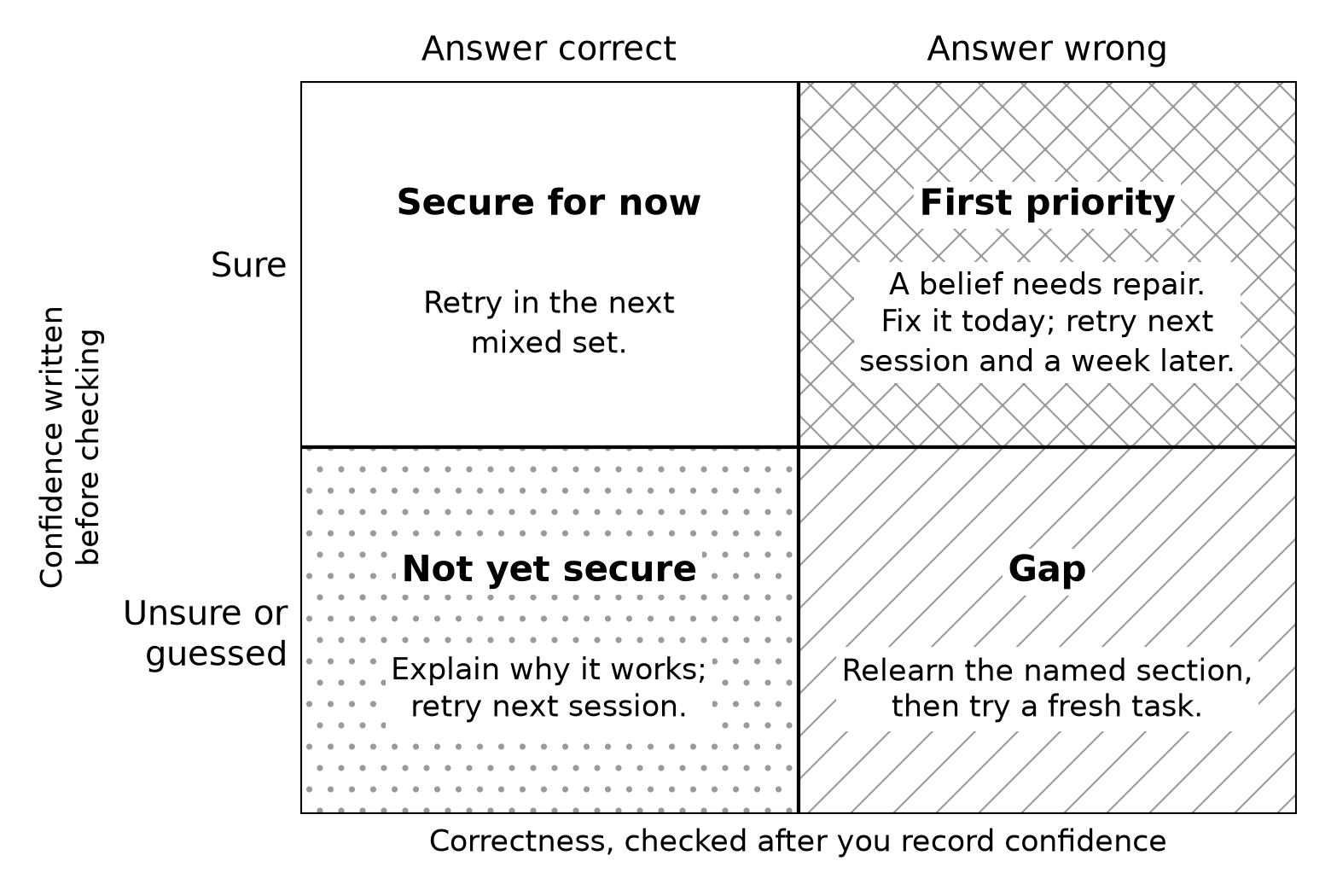
Figure 1.2. Confidence decides the next step.
Worked entry. A student keeps and for a logarithmic equation and marks sure, but makes a logarithm's argument negative. Entry: wrong and sure; validity; first incorrect step "kept without checking"; repair in Chapter 12; retry next session and a week later.
Try it 1.1. Classify each error. (a) A student reports a graph's -intercept as its zero. (b) A free-response part asked for units, and a correct answer had none.
Check your reasoning. (a) Representation: the wrong graph feature was read. (b) Communication: the mathematics was right, but a required element was missing.
Use the QR companions after the printed work
Each chapter ends with an optional companion panel: a QR code and a readable address, such as skillbyskillprep.com/go/ap/precalculus/ch01. Every lesson, question, answer and explanation is printed here, so the book is complete without the website; if an address does not load, keep working in print.
Practice
Chapter 1 has no numbered questions. Choose a route, calendar its first two weeks, set up the log, and finish Try it 1.1. Then take Chapter 2's diagnostic, Questions 1–30; explanations are in Answers, explanations and written responses at the back of the book. Log every miss and guess before Chapter 3.