What to practice
- Attempt the short diagnostic; separate algebra, interpretation, calculator and reasoning difficulties.
What thirty questions can tell you
The diagnostic after this chapter has 11 questions from Unit 1, 9 from Unit 2 and 10 from Unit 3. Each question also has one primary skill from the three course practices: procedural and symbolic fluency, multiple representations, and communication and reasoning.
It is a brief instructional sample, not a calibrated miniature exam. Topics are sampled unequally, there is no score conversion, and seven questions are weak evidence about a whole skill. Use it to choose where to start and to see whether your difficulties lie in algebra, interpretation, calculator use or reasoning.
Take it under honest conditions
The times below keep the pace of the May 2027 multiple-choice parts: 29 questions in 65 minutes, then 13 in 40.
| Part | Questions | Time | Calculator |
|---|---|---|---|
| No-calculator | 1–21 | 47 minutes | Not permitted |
| Calculator | 22–30 | 28 minutes | Graphing, radian mode |
In the calculator parts, Bluebook provides Desmos, and you may bring up to two approved handhelds; any graphing calculator works for practice.
Use the answer sheet printed just before Question 1, or the two-part sheet in the Answer Sheets and Continuation Sheets appendix. Fill one circle, A to D, per row, and beside each row write C (confident), U (unsure) or G (guess). Work without notes and answer every question.
Stop here. Take the diagnostic, then return.
Score it three ways
Mark each row right or wrong, and record misses out of each group's size. In the repair map below, a topic's first digit is its unit, and a skill's first digit is its practice.
| Group | Misses |
|---|---|
| Unit 1 | ___ of 11 |
| Unit 2 | ___ of 9 |
| Unit 3 | ___ of 10 |
| Practice 1 | ___ of 12 |
| Practice 2 | ___ of 7 |
| Practice 3 | ___ of 11 |
| No-calculator | ___ of 21 |
| Calculator | ___ of 9 |
Name the difficulty, not just the topic
Read the explanation for every miss and every G answer. Using Figure 2.1, label the earliest error that changed your answer.
- Interpretation: you misread a graph, table, formula or context.
- Reasoning: you ignored a condition, such as a domain, or overstated a conclusion.
- Algebra: the method was sound but a symbolic step failed.
- Calculator: a sound setup was entered or read incorrectly.
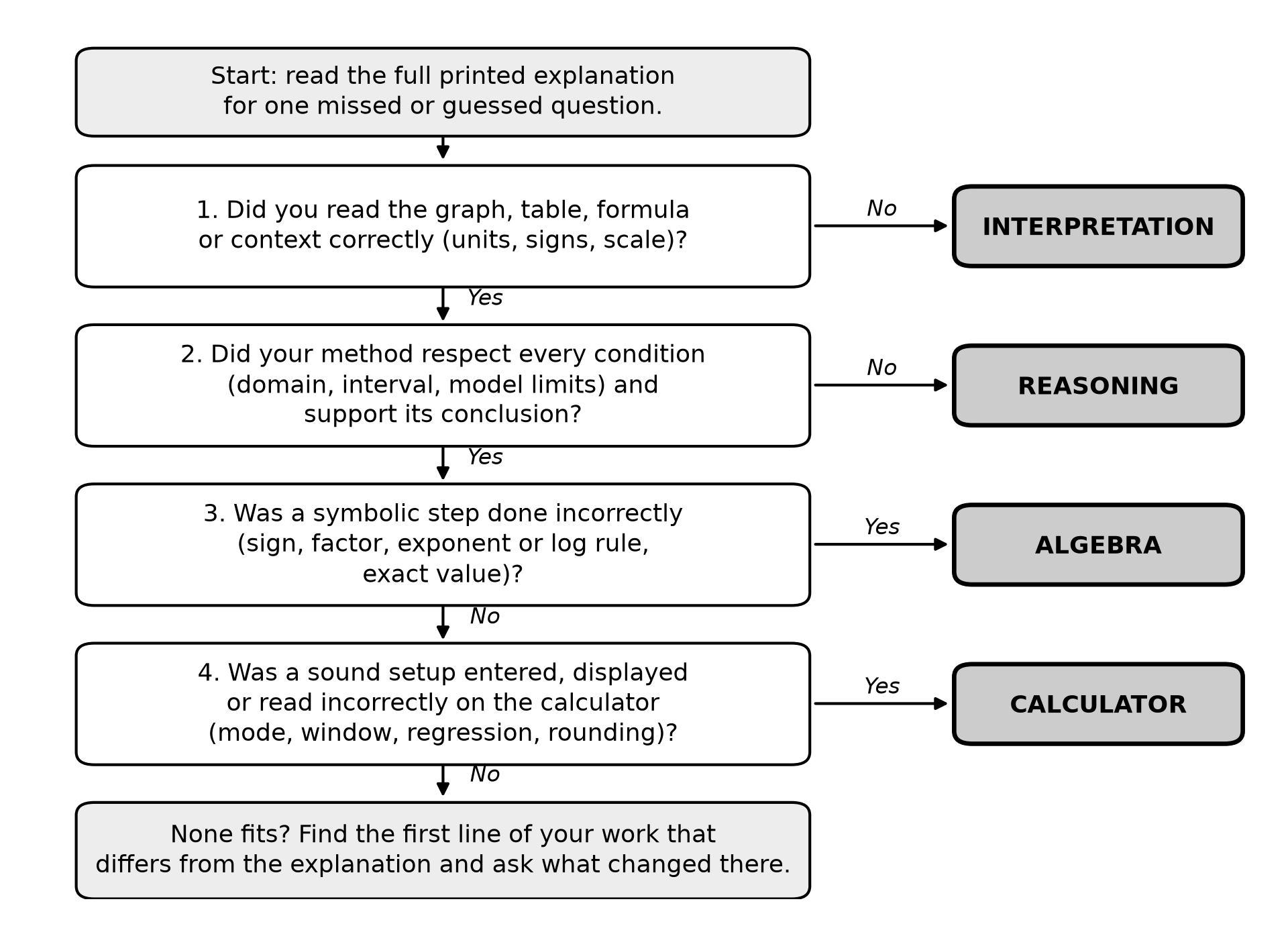
Figure 2.1. Stop at the first check that fails.
Copy each labeled miss into your Chapter 1 error record.
Worked example: one student's profile
A hypothetical student misses Questions 6, 14, 21, 22, 25, 28 and 29.
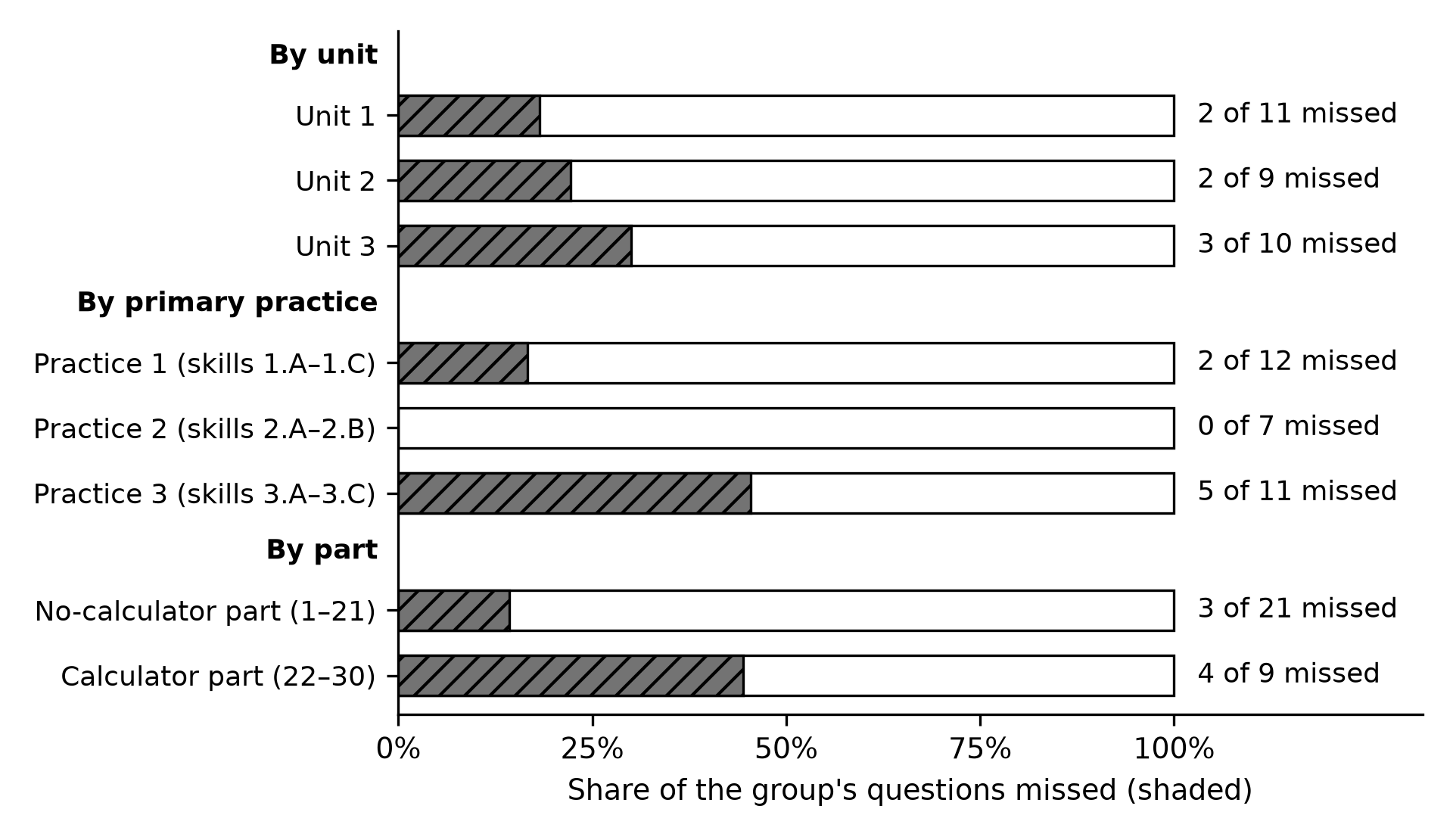
Figure 2.2. Seven misses grouped three ways.
By unit the misses are even; by practice and part they are not. On Questions 22, 25, 28 and 29, sound calculator work was followed by a misread result or an ignored condition. Questions 6 and 21 are reasoning errors too; only 14 is algebra.
Begin with Chapter 18, whose workflow ends by checking results against conditions, then work each repair lesson in book order. A week on Unit 3 would treat a reasoning habit as a content gap.
Try it 2.1
Another student misses only Questions 3, 5, 11, 13 and 19, all marked C. What is the pattern, and where should study begin?
Check your reasoning. All five are no-calculator practice 1 questions across all three units: confident misses on symbolic work, an algebra difficulty. Start with Chapter 4, rewriting each missed step correctly before its practice, then continue to Chapters 5, 8, 11 and 16.
Map each miss to its repair lesson
Each explanation's Repair and retry line names this lesson; after a miss on Questions 22–30, also review Chapter 18.
| Q | Topic | Skill | Chapter |
|---|---|---|---|
| 1 | 1.2 rates | 3.B | 3 |
| 2 | 1.3 concavity | 3.A | 3 |
| 3 | 1.5 zeros | 1.A | 4 |
| 4 | 1.6 graphs | 2.B | 4 |
| 5 | 1.10 holes | 1.B | 5 |
| 6 | 1.11 equality | 3.C | 5 |
| 7 | 1.12 transformations | 1.C | 6 |
| 8 | 1.14 domain | 3.B | 6 |
| 9 | 2.1 sequences | 1.C | 7 |
| 10 | 2.2 growth | 3.C | 7 |
| 11 | 2.4 factors | 1.B | 8 |
| 12 | 2.8 inverses | 2.A | 10 |
| 13 | 2.12 logarithms | 1.B | 11 |
| 14 | 2.13 equations | 1.A | 12 |
| 15 | 3.1 period | 2.A | 13 |
| 16 | 3.2 tangent | 2.A | 13 |
| 17 | 3.6 sinusoids | 2.B | 14 |
| 18 | 3.9 arccosine | 1.B | 15 |
| 19 | 3.10 equations | 1.A | 16 |
| 20 | 3.13 conversion | 2.B | 17 |
| 21 | 3.15 distance | 3.C | 17 |
| 22 | 1.14 regression | 1.C | 6 |
| 23 | 1.8 inequalities | 1.A | 5 |
| 24 | 1.4 extrema | 3.A | 4 |
| 25 | 2.6 residuals | 3.B | 9 |
| 26 | 2.14 models | 3.B | 12 |
| 27 | 2.15 semi-log | 2.B | 12 |
| 28 | 3.7 models | 3.B | 14 |
| 29 | 3.15 rates | 3.A | 17 |
| 30 | 3.10 tangent | 1.A | 16 |
Turn the results into a plan
- Confident misses come first. A wrong answer marked C is an error you would repeat unnoticed.
- A practice or part pattern crosses units. Repair that habit first; calculator-part misses send you to Chapter 18.
- A unit cluster points to its chapters. Missing at least half of a unit means studying its chapters in order.
Put your next chapter and a study date in your calendar now. Do not retake this diagnostic to measure progress; Practice Exam A in Chapter 23 is your next fresh measurement.
Practice
The diagnostic, Questions 1–30, follows this chapter's companion panel. Explanations of every choice, each with a Repair and retry line, are under Chapter 2: answers and explanations at the back of the book.